Showing posts with label business. Show all posts

Wednesday, December 16, 2009

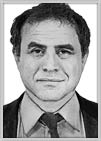
Nouriel Roubini the Macroeconomist Extraordinaire


The opportunities for global growth on a sustained basis are quite positive. Right now the basic building block of global demand , the US consumer, is faltering; therefore there is a lack of aggregate demand relative to supply. The supply has been rising because China and emerging markets have been investing so much in new factories and new productive capacity. A lack of demand relative to excess supply--that’s what the global recession is.

You have to have a complete rebalancing of the global economy. The global imbalances are not sustainable anymore.

(From Dec. 2009 issue of GQ)

I have spoken before of how I believed there existed a very real danger of slipping into a depression economy or have the “double-dip” recession model enacted upon us. I believe the danger still exists but there are many signs pointed in the other direction as well.

Roubini speaks of an “L-shaped” model in terms of his predictions for American economic recovery, and I think he holds the most accurate take on economics available. The “double-dip” is the “W-shaped” model that I spoke of before and it looks like the “L” or perhaps the optimistic “elongated U” are the far more likely graph of US economic growth.

The media calls him “Dr Doom,” and I guess that makes me “Dr Doom Jr” because I am less optimistic that we will balance the global economy. But if there was ever any question as where I get my economics, I would have to cite Roubini.

Let us not forget that he predicted the housing market burst and the coming of the global economic recession. It is important to hear what he has to say at this stage and I find it strange how often his assessment mirrors my own:
Roubini’s Three Major Concerns about current US Economy


1. The banks that “still have bad assets weighing on them, remain unable and unwilling to lend.”

2. The “US households that are increasingly indebted and decreasingly employed.”

3. The corporations that are “improving balance sheets by cutting jobs and cutting costs other than increasing revenue.”
--

The big question here:

Why in the years and months before the economic crisis was it only “bubble bloggers,” Roubini and a handful of Democrats who warned of the coming housing market bubble bursting and the resulting recession from the burst?

There is no question that Federal Reserve Chairman Ben Bernanke responded aptly to the situation and that the Congressional bailout measures were indeed necessary. What remains to be seen is if the same people who would so readily jump to rescue a sinking economy would have the foresight to see the coming of a “double-dip” recession or if they would warn of it if indeed they did. I believe many financial “experts” are people who only understand talking-up the market and have long since given up on objective assessments on economics.

Wednesday, December 9, 2009

Urban Institute Overviews The Public Option

Ezra Klein of The Washington Post has called this the "best overview of the public option" he has read so far, and I concur:

Getting to a Public Option that Contains Costs: Negotiations, Opt-Outs and Triggers

The debate over a public option has essentially become a debate over the size and role of government in the health care system. The central argument, as we see it, should be one of fiscal conservatism—that a public option should play a role in addressing the very serious problem of health care cost containment. The current debate between the left and the right on this issue is obscuring the fact that consolidation in both the insurance and provider markets is propelling a higher rate of growth in health care costs. The consolidation of power, particularly in provider markets, makes it extremely difficult for insurers to negotiate rates for their services and contributes to rapid growth in health care costs. A strong public option is one that ties provider rates in some way to Medicare rates (though set at likely higher levels), and that is open to any individual or firm regardless of firm size. It would thus provide countervailing power to providers and help control cost growth.

We argue that a strong version is necessary because there is little else in health reform that can be counted on to contribute significantly to cost containment in the short term. Capping tax-exempt employer contributions to health insurance has great support among many analysts (including us), but it faces considerable political opposition. Proposals such as comparative effectiveness research, new payment approaches, medical homes and accountable care organizations, all offer promise but could take years to provide savings. Thus, the use of a strong public option to reduce government subsidy costs and as a cost containment device should be an essential part of the health reform debate.

We recognize that there is opposition to a strong public option. Both the House and Senate proposals are considering relatively weak versions to make the public option more acceptable. Both proposals would have the public option negotiate rates with physicians and hospitals. We see two problems with this. One is that negotiating rates is not simple and it raises difficult implementation issues; for example, with whom would the government negotiate? Further, negotiations are most likely to be unsuccessful with providers who have substantial market power. Since this is at the heart of the cost problem, a strategy of negotiations seems unlikely to be effective, as has been affirmed by cost estimates from the Congressional Budget Office.

The Senate has proposed a public option with an opt-out provision. This has the advantage of recognizing regional diversity in political philosophy by allowing states to pass legislation to keep it from being offered in their states. A disadvantage of this proposal is that it would exclude many who would potentially benefit from a public option. The states likely to opt out are likely to be those with high shares of low-income people and many uninsured.

The other alternative is to establish a strong public option but not implement it unless a triggering event occurred. The goal would be to allow the private insurance system to prove that it can control costs with a new set of insurance rules and state exchanges. The triggering events could be the level of premiums exceeding a certain percentage of family incomes or the growth in health care spending exceeding certain benchmarks. Since the public option would only be triggered because of excessive costs, however measured, we assume that a relatively strong version of a public option would come into play.

We recognize that taking a strong public option off the table may be necessary to enact reform legislation. But this will mean, at a minimum, higher government subsidy costs by not permitting a payer with substantial market power to bring cost containment pressure on the system. The outcome is likely to be that costs will continue to spiral upward. In effect, the nation would be relying on the range of promising pilot approaches to cost containment that would take some time to be successful. If they are not, we may be left with increasingly regulatory approaches, such as rate setting or utilization controls that apply to all payers. This would mean much more government involvement than giving people a choice of a low-cost public option that would be required to compete with private insurers.

(Read entire paper in PDF)

Saturday, September 26, 2009

Mexico in Crisis Today, America in Crisis Tomorrow

According to the Public Broadcasting Station (affiliate: KQED) and the Mexican authorities an estimated 5,000 people have been killed in Mexico in the past year.

Kidnappings, public displays of carnage and executions are common place in areas where brave men and women speak out against the violent reign of the Cartels.

480 missing persons and kidnapping cases leave loving parents asking continually unanswered questions of the Mexican authorities.

A Cartel televised informant described a complete lack of any code of conduct in any of his experiences. He stated that Tijuana was the central focus of the Cartels for the drug trade, and launching point into the US.

The President of Mexico, Felipe Calderon, was reported to say he saw "no escape" from a tail-spin into a corrupt culture of violence and drug lords in years to come.

The notion that the state of Mexican-national affairs will not ultimately effect American-national affairs is not supported by facts.

The likelihood of these events in Mexico between 2007 and 2008 effecting America in a highly negative fashion in years to come becomes more likely under any system that precludes the importance of action.

The danger posed by the Cartels and other violent organizations established in Mexico should be at the highest of priorities of border-state governors and all applicable agencies charged to such matters in our government.

Eric Lightborn

http://americapress.wordpress.com/

http://twitter.com/EricLightborn

December 19th 2008

Friday, August 7, 2009

The Last Honest Salesman in America

1.index_03_2

2008-03-19-man

What happened just now in America?

Was anyone else paying attention, or was it just me?

The last thing we need these days are people running a fast game and rolling out the carpet of corporate lies for anyone put in front of them.

What we need is an army of intelligent and savvy business people who can stand behind what they do and not become fast talking cheats.

1.used-car-salesman
I stand here in a world of sales and marketing to tell you that certain people push you toward something you don't really want and all they really see when they look at you is a big dollar sign with feet.

We are not all this way. And I would like to say I'm proud to tear myself from the mold and stand on my own two feet of integrity.

There is still many things that I don't do, that I could to help others out in their sales endeavors, that might be an ultimate factor in proving just how I am playing the sales game over here. But holding onto trade secrets and keeping things from rebounding back to the office is hardly the same thing and trying to get you to buy something you don't really want or need.

I stand here the Last Honest Salesman in America. And when you deal with me you deal with the truth.

Thursday, May 21, 2009

Mad Money is Pumping Natural Gas and Jimmy Fallon is Hilarious

“Natural gas is 50% cleaner than oil.”
“Obama is going to need a bridge-fuel to get to solar and wind.”

- Jim Cramer, CNBC, May 21st, 2009

I agree that there is much need for a transition fuel in order to pragmatically address the energy crisis. In order to eventually cut the ties of foreign oil dependence our nation must take aggressive steps toward energy independence.

I throw my insignificant hat in ring in favor of Natural Gas over Clean Coal Technology or continued dependence on Big Oil.

America must kick it’s oil addiction but going cold turkey will only keep us in the cycle of foreign oil dependence.

-----------
Jim Cramer appeared on Late Night with Jimmy Fallon prior to today’s broadcast. Jim explained his ’pre-game’ strategy for the show and how he maintains his energy level throughout the show. After elbow-bumping with him, Jimmy exclaimed:

“We are like the whitest gang in the world!”
- Jimmy Fallon, Comedian


BOO-YAH!

realmoney.com

Tuesday, March 17, 2009

Blah, Blah, AIG, Blah, AIG, Blah

Can you say: media scapegoat? Can you say: easy target?

No fan of AIG or anything. Bunch of suits passing around paper that doesn't move one piece of anything that helps even one worker. Let them all pick crops, I say.

But I am a media-watchdog and have had my eye on the government like a hawk. Bonuses for these jokers is not the right 'aim' of this new American-frustration we are all experiencing.

Bemoaning the continuation of old and backwards thinking will not move us on. We must come to readily expect ourselves for many things and remain unphased. America must quite literally reach a No Bull State of Operation extremely quickly if we are regain any of what has been lost.

We can expect the economic guru's to come out of the wood-works. We can expect our former leaders in business and government to try to interject themselves and contort the matter at hand.

Just as every peoples before us we may use this moment to strive or use this moment to relent.
A demand for accountability is but a beginning. The true goal must always be to bring forth the individuals who will operate as honest brokers and stewards of the economy while tossing aside corporatist and those who played us all for fools.

They are the true enemy of the common person.

Not any specific group but the whole entity of continued corruption.